World Bank HIV/AIDS Programme Development Project (HPDP II)
Funded by: The World Bank
Principal Recipient: National Agency for the Control of AIDS (NACA)
Sub-Recipient / Service Support Organization: Economic and Social Empowerment of Rural Communities (ESERC)
Project Duration: August 2014 – February 2017
Project Coverage: South East Zone, Nigeria (Abia, Anambra, Ebonyi, Enugu, and Imo States)
Background
The HIV/AIDS Programme Development Project Phase II (HPDP II) was a flagship World Bank–supported intervention designed to strengthen Nigeria’s national response to HIV and AIDS. Implemented under the leadership of the National Agency for the Control of AIDS (NACA), the project aimed to scale up evidence-based HIV prevention, improve access to quality HIV counselling, testing, care, and support services, and strengthen systems for coordination, accountability, and results-based management.
A critical component of HPDP II was the engagement of Civil Society Organizations (CSOs) and private sector actors through the HIV/AIDS Fund (HAF), recognizing their strategic role in reaching vulnerable and underserved populations. To ensure value for money, accountability, and measurable impact, NACA engaged independent Service Support Organizations (SSOs) to provide performance monitoring, verification, mentoring, and technical support to CSOs implementing HIV interventions.
Within this framework, ESERC was engaged as a Performance Monitoring Service Support Organization (PM-SSO) for the South East Zone, covering Abia, Anambra, Ebonyi, Enugu, and Imo States.
Project Overview
As a PM-SSO, ESERC worked closely with NACA and the State Agencies for the Control of AIDS (SACAs) to provide independent verification and performance monitoring of CSOs contracted under the HIV/AIDS Fund. ESERC’s role was central to ensuring that funded CSOs implemented approved activities, met contractual obligations, produced credible results, and adhered to agreed monitoring, evaluation, and financial reporting standards.
The assignment combined performance audit, data quality assurance, capacity building, mentoring, and reporting, thereby strengthening both accountability and institutional capacity across the civil society response to HIV in the South East.
Project Goal and Objectives
Overall Goal
To support NACA in reducing the risk of HIV infection by scaling up effective prevention interventions and increasing access to, and utilization of, HIV counselling, testing, care, and support services through improved performance and accountability of Civil Society implementers.
HPDP II Core Objective
To reduce the risk of HIV infection by scaling up prevention interventions and increasing access to and utilization of HIV counselling, testing, care, and support services.
HPDP II Project Components
The HPDP II was structured around three key components:
1. Expanding the Public Sector Response
Strengthening government systems and service delivery for HIV prevention, treatment, and care.
2. Expanding the Civil and Private Sector Response to HIV/AIDS
Supporting civil society and private sector organizations through grants under the HIV/AIDS Fund (HAF), with an increased focus on results, accountability, and performance.
3. Strengthening Project Coordination and Management
Enhancing systems for coordination, monitoring, evaluation, and financial management at national and state levels.
Under Component 2, specific emphasis was placed on:
• Evidence-based target setting using state-specific epidemiological data
• Performance-based monitoring and results verification
• Clear communication of expected indicators, targets, and deliverables to CSOs
• Longer funding periods and increased grant sizes for better impact
• Addressing identified gaps through engagement of specialized technical support
ESERC’s Role as a Performance Monitoring SSO
ESERC was engaged by NACA to provide independent assurance that CSOs funded under the HAF were fulfilling the terms of their contracts. This included verifying activity implementation, validating reported results, assessing financial accountability, and identifying capacity gaps requiring support.
Specific Objectives of ESERC’s Service Support
The specific objectives of ESERC’s PM-SSO role included:
• Objectively verifying that funded CSOs implemented approved activities and delivered expected results as outlined in their contracts.
• Collecting programme and monitoring and evaluation (M&E) data from contracted CSOs on a monthly basis and submitting consolidated quarterly summaries to SACAs and NACA.
• Ensuring availability, accuracy, and reliability of financial data submitted by contracted CSOs.
• Making evidence-based recommendations to SACAs and NACA based on CSO performance and identified capacity needs.
• Verifying the accuracy and consistency of narrative, programmatic, and financial reports submitted by CSOs.
• Providing on-the-spot mentoring and technical assistance to CSOs on programme implementation, monitoring, evaluation, and reporting.
Key Activities Implemented by ESERC
To achieve these objectives, ESERC carried out a wide range of activities, including:
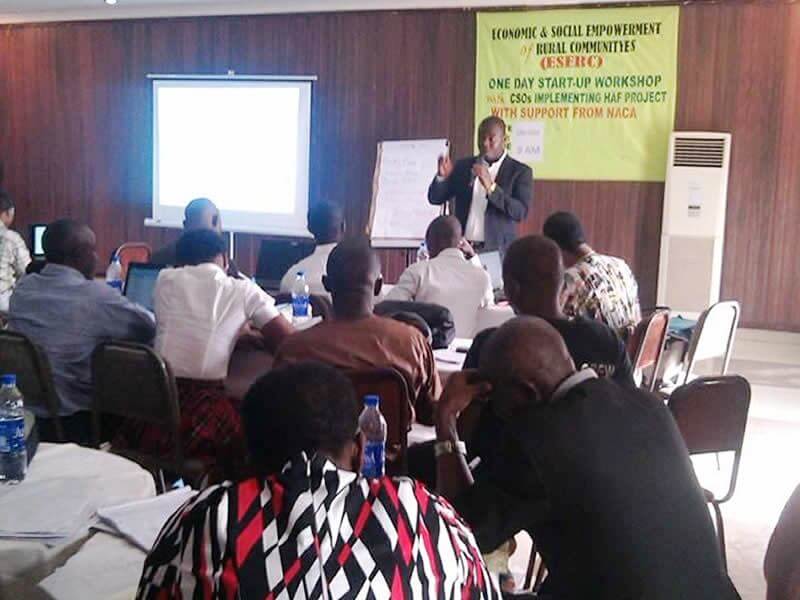
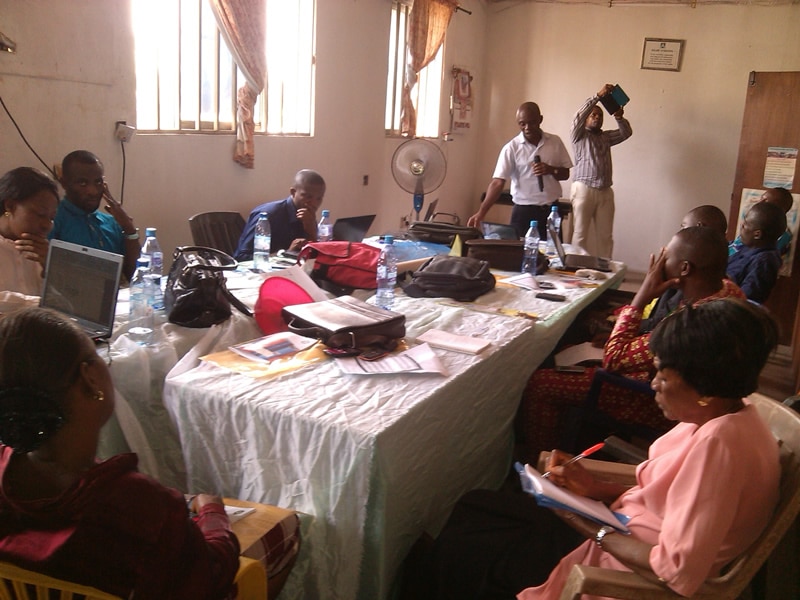
• Participation in start-up workshops across South East states and facilitation of orientation sessions for contracted CSOs on PM-SSO expectations, reporting standards, and performance benchmarks.
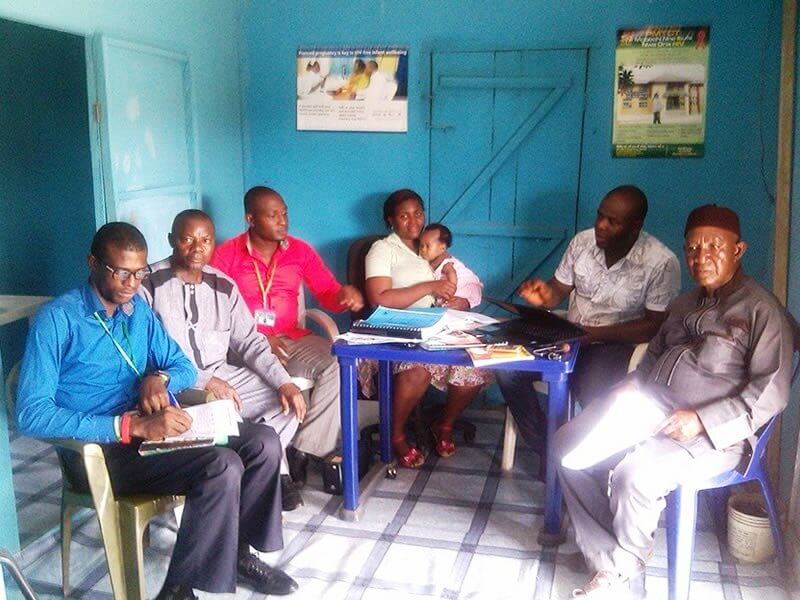
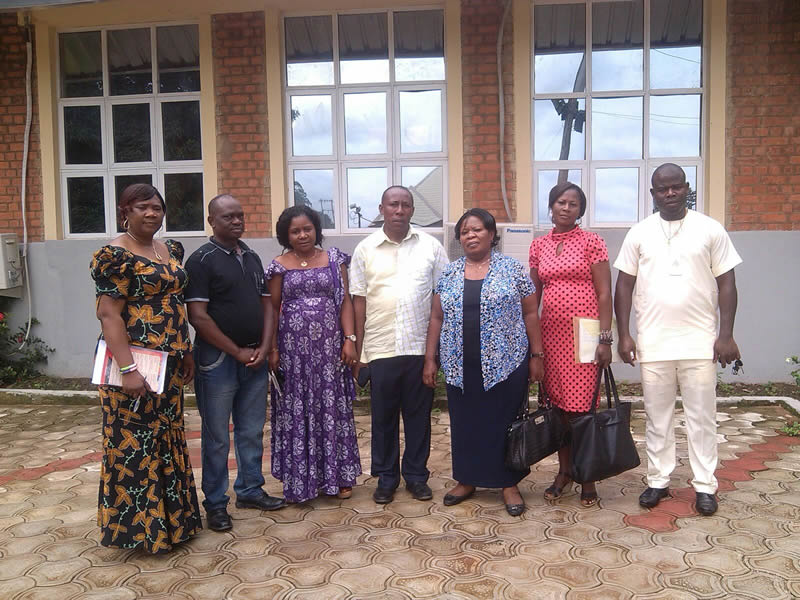
• Conducting monthly monitoring visits to all contracted CSOs across the five states.
• Providing technical assistance (TA) and conducting Data Quality Assurance (DQA) to improve accuracy, completeness, and timeliness of reported data.
• Ensuring CSO compliance with approved work plans, budgets, and contractual deliverables.
• Collecting programmatic and M&E data monthly and submitting quarterly performance reports to NACA detailing progress, challenges, and data reliability.
• Conducting site verification visits to authenticate reported activities and outputs.
• Participating in quarterly review meetings with NACA and other SSOs to share experiences, challenges, and lessons learned.
• Identifying and documenting capacity gaps that could not be addressed immediately and formally communicating these to NACA and SACAs.
• Submitting rapid situation reports to NACA and SACAs on issues requiring urgent attention outside routine reporting cycles.
Outcomes and Achievements
Through its PM-SSO engagement, ESERC achieved significant outcomes across the South East Zone:
• Strengthened the institutional and technical capacity of all contracted CSOs in programme implementation, monitoring and evaluation, and financial management.
• Ensured that all contracted CSOs produced validated, credible, and verifiable results, contributing to improved accountability and performance under the HAF.
• Improved CSO understanding and application of results-based management and performance reporting.
Capacity Areas Strengthened
ESERC built CSO capacity in the following key areas:
• HIV/AIDS Minimum Prevention Package of Interventions (MPPI) strategy
• Use of MPPI data capture tools
• District Health Information System (DHIS) reporting
• Programme reporting and documentation
• Establishment and management of effective financial systems
• Monitoring and Evaluation (M&E) planning, implementation, and reporting
Conclusion
ESERC’s role as a Performance Monitoring Service Support Organization under the World Bank–supported HPDP II significantly strengthened the quality, accountability, and effectiveness of civil society–led HIV interventions in Nigeria’s South East Zone. By combining rigorous performance monitoring with hands-on mentoring and technical assistance, ESERC contributed to improved service delivery, stronger data systems, and enhanced sustainability of the civil society response to HIV and AIDS. The experience further reinforced ESERC’s institutional expertise in health systems strengthening, results-based monitoring, and donor-funded programme implementation.