Global Fund HIV/AIDS New Funding Model (GF HIV-NFM) Project
Funded by: Global Fund HIV Project in Nigeria
Principal Recipient: Society for Family Health (SFH)
Sub-Recipient: Economic and Social Empowerment of Rural Communities (ESERC)
Project Duration: October 2015 – December 2017
Project Location: Enugu State, Nigeria
Project Background and Context
The Global Fund HIV/AIDS New Funding Model (GF HIV-NFM) Project was implemented in Nigeria as part of a strategic shift toward “Investing for Impact against Tuberculosis and HIV.” The New Funding Model was designed to maximize results, strengthen health systems, and ensure efficient use of resources to reduce the burden of HIV and tuberculosis across the country.
Under this framework, the Society for Family Health (SFH) served as one of the Principal Recipients of the Global Fund HIV grant, with responsibility for implementing HIV prevention interventions among the General Population and Key Populations, including Men who have Sex with Men (MSM), Female Sex Workers (FSW), and People Who Inject Drugs (PWID), as well as conducting action research among Adolescents and Young People.
The project was implemented across ten states and the Federal Capital Territory (FCT Abuja), namely: Akwa Ibom, Edo, Enugu, Kano, Kaduna, Gombe, Anambra, Imo, Lagos, Oyo, and FCT Abuja. Within this broader national response, ESERC was engaged as a Sub-Recipient to SFH with specific responsibility for implementing HIV prevention interventions targeting Men who have Sex with Men (MSM) in Enugu State.
ESERC’s Role and Implementation Strategy
As a Sub-Recipient, ESERC led the implementation of HIV prevention services for MSM in Enugu State, utilizing the Minimum Prevention Package Intervention (MPPI) strategy. The MPPI approach provided a comprehensive and integrated package of services aimed at reducing HIV transmission, promoting safer sexual behaviors, and strengthening linkages to testing, treatment, and care among MSM.
The project was implemented in four Local Government Areas (LGAs) of Enugu State, primarily urban and semi-urban settings with higher population density and increased vulnerability:
1. Enugu East LGA
2. Enugu North LGA
3. Enugu South LGA
4. Nsukka LGA
To ensure effective community engagement and service delivery, ESERC recruited, trained, and supported MSM Peer Educators across these LGAs. These Peer Educators played a critical role in building trust within the MSM community, conducting peer education sessions at identified hotspots, disseminating HIV prevention information, and mobilizing community members to access services.
Key Interventions and Activities
The GF HIV-NFM project in Enugu State focused on the following core interventions:
• Peer-led HIV prevention education sessions targeting MSM at community and hotspot levels.
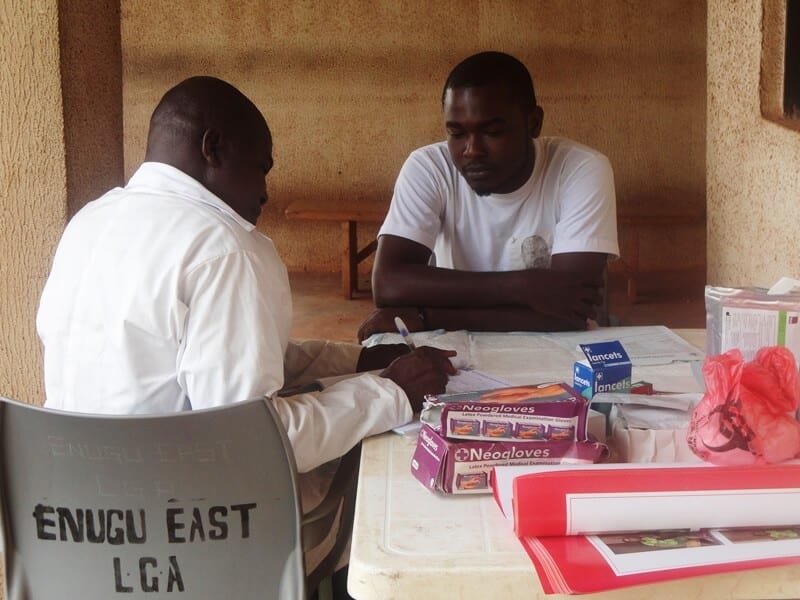
• HIV and Sexually Transmitted Infections (STIs) Testing Services (HTS) delivered through mobile and community-based platforms.
• Distribution of HIV prevention commodities, including male condoms, lubricants, and co-packaged condoms and lubricants to promote consistent and correct use.
• Referral and linkage to care, ensuring that MSM who tested positive for HIV or other STIs were promptly referred to designated and accredited health facilities within Enugu State.
• Follow-up and tracking of referrals to support retention in care and improve treatment outcomes.
Individuals who tested positive were counseled and linked to health facilities providing antiretroviral therapy (ART) and STI management services, with ESERC supporting referral completion and continuity of care.
Project Objectives
The New Funding Model sought to achieve the following outcomes by December 2017:
1. Reduce new HIV infections and improve the quality of life of people living with HIV and those affected by the epidemic.
2. Provide Nigerians with universal access to high-quality, patient-centered prevention, diagnosis, and treatment services for TB, TB/HIV, and drug-resistant TB by 2020.
3. Restore public confidence in Nigeria’s primary healthcare system and reverse declining utilization of primary healthcare facilities.
Specific Grant Objectives
• Attain universal coverage for bridge populations through mobile HIV testing services integrated within prevention packages.
• Increase the availability and access to condoms and lubricants for over 1.1 million members of the general population during the grant period.
• Reach 54,407 Key Populations (KPs) with the Minimum Prevention Package of Interventions.
• Identify and analyze factors increasing vulnerability of girls aged 15–24 years through action research.
• Generate, implement, and share evidence, innovations, and lessons learned to inform national HIV programming.
Key Outputs and Results
Through ESERC’s implementation, the project recorded the following outputs:
• 602 MSM counseled, tested, and received HIV test results
• 49 referrals made from the community level to health facilities for STI services
• 162 HIV-positive individuals referred by Mobile HIV Testing Services (MHTS) counselor-testers for care and treatment
• 112 completed referrals, indicating successful access to health services
• 355,320 male condoms distributed
• 67,200 co-packaged condoms and lubricants distributed
• 16,870 lubricants distributed
• 377 MSM reached with the Minimum Prevention Package of Interventions (MPPI)
These results contributed significantly to improving HIV prevention coverage, early diagnosis, and linkage to care among MSM in Enugu State.
Challenges Encountered
Despite notable achievements, the implementation of the project faced several challenges:
• The Same Sex Marriage (Prohibition) Act created fear and reluctance among many MSM to openly identify with the project or access services.
• High levels of stigma and discrimination against MSM limited community visibility and engagement.
• Non-disclosure of HIV-positive status to counselor-testers affected continuity of care and accurate data capture.
• Erroneous beliefs about HIV cure, particularly among individuals on long-term antiretroviral therapy, affected adherence and risk perception.
Key Lessons Learned
Several important lessons emerged during project implementation:
• Accompanied referrals, combined with active engagement of facility healthcare workers during community outreaches, significantly improved linkage to care and uptake of integrated HIV services.
• Meaningful involvement of MSM community members, particularly through their Community-Based Organizations (CBOs), enhanced trust, ownership, and service uptake.
• The use of peer tracking cards greatly reduced double-counting and duplication of services among a highly mobile MSM population.
• Ensuring the timely availability of commodities at the onset of implementation was critical to uninterrupted service delivery and overall grant performance.
• Sustained engagement with State Actors throughout project implementation strengthened government ownership and promoted sustainability of HIV interventions at the state level.
Conclusion
The Global Fund HIV-NFM Project implemented by ESERC in Enugu State demonstrated the effectiveness of peer-led, community-based HIV prevention strategies for Key Populations. Despite operating within a challenging legal and social environment, the project achieved meaningful outcomes in HIV prevention, testing, referral, and linkage to care for MSM. The lessons learned continue to inform ESERC’s programming approach and reinforce the importance of inclusive, rights-based, and community-driven responses in ending the HIV epidemic in Nigeria.