EU–UN Spotlight Initiative Project
Funded by: European Union – United Nations Spotlight Initiative (Implemented under the UNDP)
Date: November 2019 – December 2023
Geographical Coverage: Ebonyi State, Nigeria
Project Overview
The EU–UN Spotlight Initiative is a global partnership between the European Union and the United Nations aimed at eliminating all forms of gender-based violence (GBV), sexual and gender-based violence (SGBV), and harmful practices against women and girls. In Ebonyi State, Nigeria, ESERC implemented the project through a comprehensive, survivor-centered, and multi-sectoral approach aligned with the project’s six thematic pillars.
The project focused on strengthening laws and policies, building institutional capacity, preventing violence through community mobilization, improving access to survivor-centered services, and enhancing data systems for evidence-based action. Through strong collaboration with government institutions, law enforcement agencies, civil society organizations, traditional and religious leaders, and community structures, the project contributed to the establishment of sustainable, government-owned systems for GBV prevention and response in Ebonyi State systems that have remained functional beyond the project lifecycle.
Key Achievements, Outputs, and Outcomes
Pillar 1: Laws and Policies
Promoting laws and policies that prevent GBV, discrimination, and impunity
Key Interventions and Achievements
• Conducted sustained policy advocacy and strategic engagements with relevant Ministries, Departments, and Agencies (MDAs) to promote effective implementation of the Violence Against Persons (Prohibition) (VAPP) Act in Ebonyi State.
• Facilitated high-level stakeholder dialogues advocating for the domestication of the Disability Act, with a focus on protecting women and girls with disabilities who face heightened risks of GBV.
• Supported multi-stakeholder collaboration that culminated in the signing of a Memorandum of Understanding (MoU) between key MDAs, law enforcement agencies, and the Ebonyi State GBV Taskforce to institutionalize coordinated GBV response.
• Collaborated with legal advocacy bodies, including the International Federation of Women Lawyers (FIDA), the National Human Rights Commission (NHRC), and other civil society actors to promote survivor-centered justice and legal reforms.
• Supported advocacy that contributed to the establishment of a dedicated GBV Court in Ebonyi State to accelerate adjudication of GBV cases.
Outcomes
• Strengthened political and institutional commitment to enforcing GBV-related laws in Ebonyi State.
• Improved policy attention to the inclusion and protection of women and girls with disabilities.
• Formalized coordination mechanisms for GBV prevention and response across government and non-state actors.
• Enhanced access to survivor-centered justice through specialized legal processes, including faster adjudication of GBV cases via the GBV Court.
Pillar 2: Institutions
Strengthening institutions to prevent and respond to GBV
Key Interventions and Achievements
• Established and officially launched the Ebonyi State GBV Taskforce as a multi-sectoral coordination platform comprising MDAs, law enforcement agencies, judiciary actors, and Civil Society Organizations (CSOs).
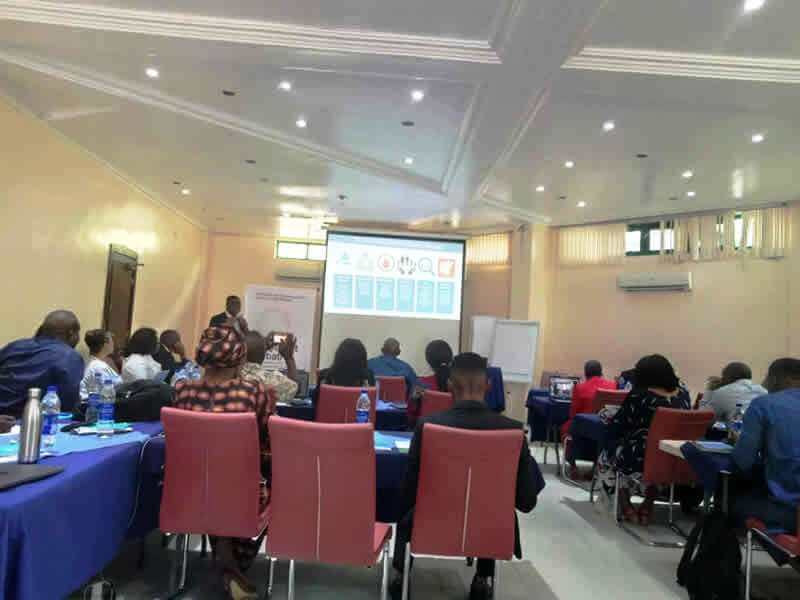
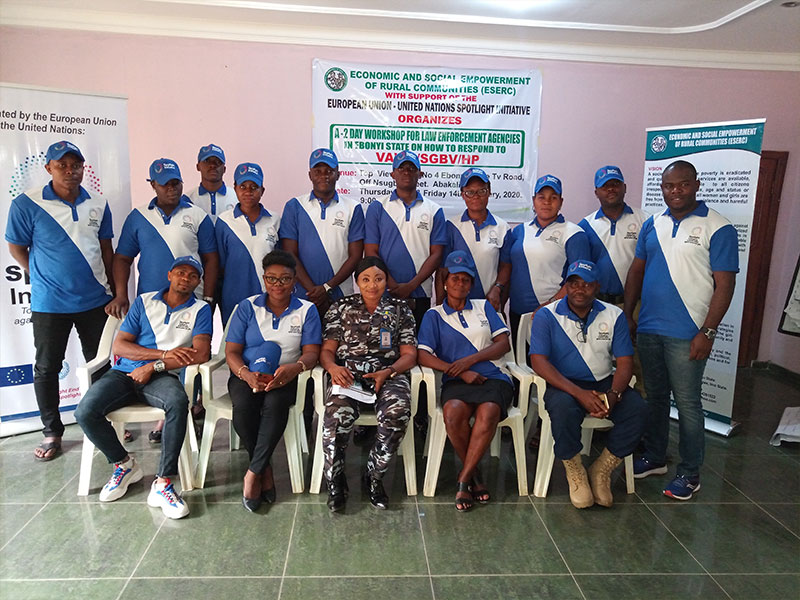
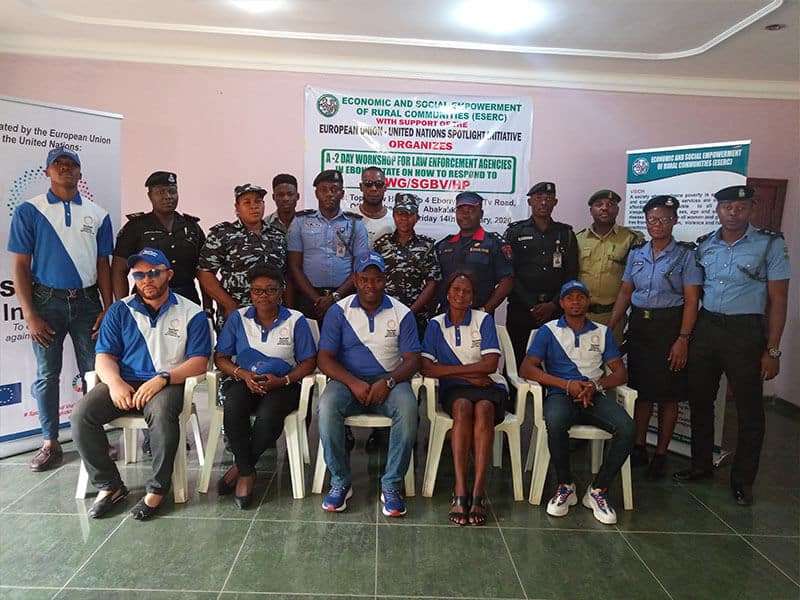
• Conducted comprehensive capacity-building trainings for Taskforce members, police officers, and judicial personnel on survivor-centered case management, ethical handling of GBV cases, and referral processes.
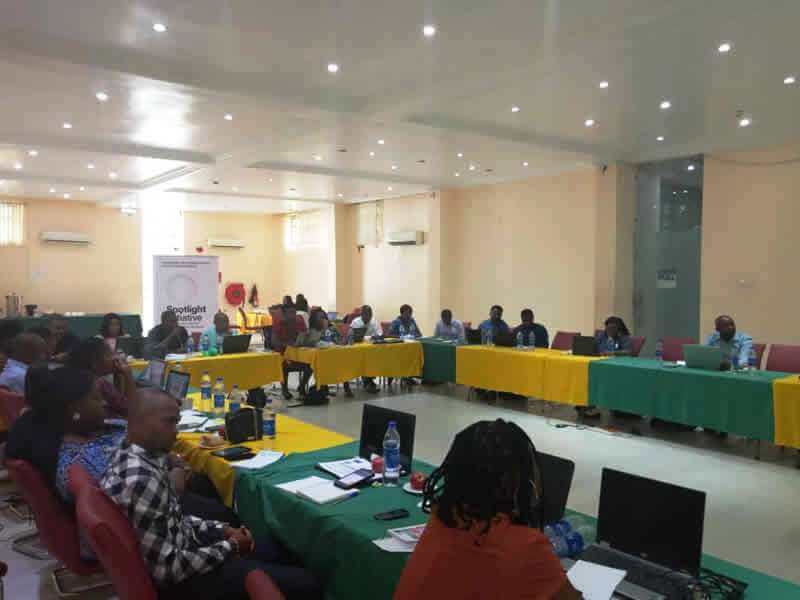
• Facilitated interface meetings among traditional rulers, Community Advocacy Groups (CAGs), law enforcement agencies, and the Taskforce to strengthen collaboration and clarify institutional roles.
• Supported the development and operationalization of referral pathways linking police divisions, health facilities, social welfare departments, and the judiciary.
• Due to the Taskforce’s effectiveness, USAID’s Integrated Health Program (IHP) partnered with the Taskforce and donated a brand-new SUV to enhance rapid response and field operations.
Outcomes
• A functional, government-recognized GBV coordination body operating across Ebonyi State.
• Improved institutional capacity and professionalism in GBV prevention and response.
• Faster response to reported cases and improved inter-agency collaboration.
• Strengthened emergency response, referral, and survivor support mechanisms.
Pillar 3: Prevention
Promoting gender-equitable social norms and behaviors
Key Interventions and Achievements
• Established and trained 20 Community Advocacy Groups (CAGs) across 20 communities in Abakaliki, Ebonyi, Ezza South, and Onicha LGAs.
• Conducted sustained community sensitization and outreach activities in churches, marketplaces, schools, and village assemblies.
• Produced and widely distributed Information, Education, and Communication (IEC) materials containing GBV reporting hotlines and Taskforce contact details.
• Organized dialogue sessions with traditional rulers, religious leaders, youth groups, and men on positive masculinities, gender equality, and non-violent conflict resolution.
• Integrated women’s economic empowerment initiatives to address economic dependency as a key driver of GBV.
Outcomes
• Increased community awareness and rejection of GBV and harmful practices.
• Improved community-level reporting and early identification of GBV cases.
• Positive shifts in attitudes toward gender equality and women’s rights.
• Reduced vulnerability of women through improved economic resilience.
Pillar 4: Services
Ensuring survivor-centered, accessible, and quality services
Key Interventions and Achievements
• Provided survivors with access to legal aid, psychosocial counseling, and referrals through the GBV Taskforce’s legal and counseling teams.
• Strengthened survivor referral and case management systems through close coordination with police, health facilities, and social welfare departments.
• Enhanced law enforcement response through continuous engagement and capacity-building.
• Conducted sustained advocacy that resulted in the issuance of free medical reports for GBV survivors at the National Obstetrics and Fistula Centre (NOFIC), Abakaliki, removing a major financial barrier to justice.
Outcomes
• Improved access to comprehensive, survivor-centered GBV services.
• Removal of cost barriers that previously limited survivors’ access to justice.
• Increased survivor confidence in formal justice and support systems.
• More effective and coordinated GBV case management across sectors.
Pillar 5: Data
Improving the availability and use of GBV data
Key Interventions and Achievements
• Supported continuous documentation and reporting of GBV cases to the National GBV Dashboard.
• Trained community structures, police officers, and service providers on ethical data collection, confidentiality, and reporting standards.
• Shared GBV data with MDAs and partners for planning, monitoring, and advocacy.
Outcomes
• Significant improvement in the quality, accuracy, and use of GBV data.
• Strengthened evidence-based advocacy and policy engagement.
• Enhanced accountability and monitoring of GBV trends in Ebonyi State.
Notable Impact:
Prior to the launch of the Ebonyi State GBV Taskforce in November 2021, Ebonyi State ranked 23rd on the National GBV Dashboard in terms of GBV reporting. By December 2023, Ebonyi State had moved to 2nd position nationally, reflecting dramatic improvements in reporting, coordination, and survivor confidence. In recognition of this achievement, the Federal Ministry of Women Affairs awarded Ebonyi State and formally recommended the Ebonyi GBV response model for replication across all states of the federation.
Sustainability and Post-Project Continuity
More than two years after the conclusion of the EU–UN Spotlight Initiative in Ebonyi State, the Ebonyi State GBV Taskforce remains active and fully functional. The Taskforce continues to respond to GBV cases, working closely with the state government, law enforcement agencies, civil society organizations, and new development partners and donors. This sustained functionality reflects strong government ownership, effective institutionalization of GBV response systems, and the long-term impact of ESERC’s implementation approach.
In addition, the Community Advocacy Groups (CAGs) established and trained across 20 communities in the project LGAs have remained active beyond the project period. These community structures continue to carry out grassroots sensitization, promote prevention messaging, identify and refer GBV cases, and serve as trusted first responders within their communities. The continued engagement of both the GBV Taskforce and community-level actors has been widely commended as a model of sustainability, demonstrating that the project’s outcomes have been successfully embedded within existing state and community systems.
Launch of the Ebonyi State GBV Taskforce
On 30 November 2021, ESERC, with support from the EU–UN Spotlight Initiative, officially launched the Ebonyi State GBV Taskforce and facilitated the signing of a Memorandum of Understanding (MoU) among law enforcement agencies, the Ministry of Justice, the Ministry of Women Affairs, Ministry of Health, Ministry of Education, Ministry of Budget and Planning, Nigerian Police Ebonyi State Command and the Ebonyi State GBV Taskforce. The launch institutionalized a coordinated, survivor-centered GBV response system in Ebonyi State. Key outcomes included improved inter-agency collaboration, standardized referral pathways, increased GBV reporting, and enhanced access to justice. Within one month, over 400 GBV cases were reported, leading to arrests and court actions, demonstrating early impact.
Challenges
• Cultural resistance driven by deeply rooted traditional norms.
• Preference for informal mediation over formal legal prosecution.
• Economic vulnerability limits survivors’ ability to exit abusive environments.
Recommendations
• Sustain continuous engagement with traditional and religious leaders.
• Strengthen enforcement and implementation of the VAPP Act.
• Scale up economic empowerment initiatives for GBV survivors.
• Institutionalize and maintain a state-wide, integrated GBV referral system.