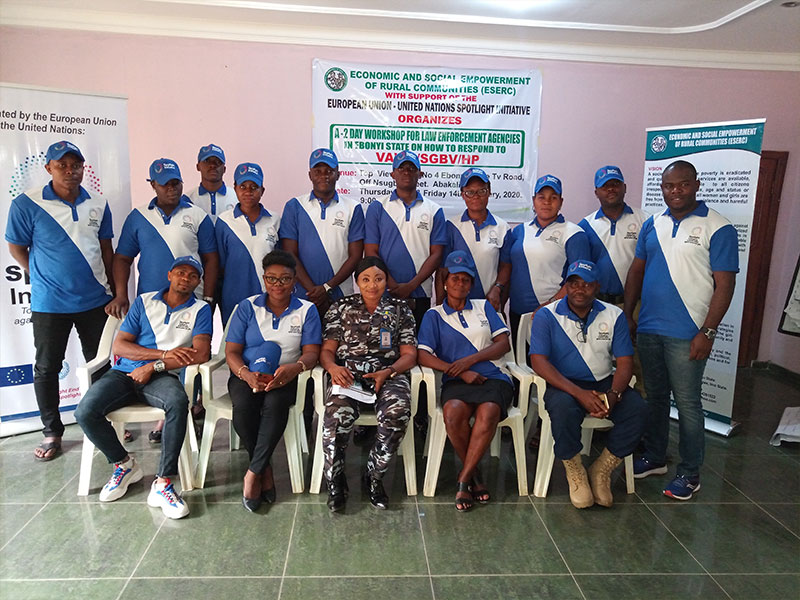
The following are ESERC’s main areas of focus:
1. Health Care and Health Advocacy
ESERC promotes equitable access to quality health services, especially for vulnerable populations in rural and underserved communities. The organization implements health outreach programs, strengthens health systems through community structures, advocates for ethical and rights-based healthcare policies, and supports the uptake of reproductive, maternal, neonatal, and child health (RMNCH) services. ESERC also engages stakeholders in accountability and transparency efforts to ensure health equity.
2. Economic Empowerment and Livelihood Support
Recognizing poverty as a root cause of vulnerability, ESERC empowers women, youth, and marginalized groups through vocational skills training, financial literacy, access to microgrants, and entrepreneurship support. The organization promotes sustainable livelihoods and community self-reliance by strengthening rural cooperatives, smallholder farmers, and informal business owners to improve income generation and economic stability.
3. Gender Equality and Women’s Rights
ESERC works to eliminate gender-based violence, harmful traditional practices, and systemic barriers that marginalize women and girls. Through awareness campaigns, survivor-centered services, legal and psychosocial support, and community advocacy, ESERC promotes the rights of women and girls. The organization also builds the capacity of local actors and institutions to advance gender justice and women’s leadership at all levels.
4. Education and Skill Development
ESERC supports access to inclusive and quality education, particularly for out-of-school children and disadvantaged youth. The organization provides school support programs, remedial education, and learning materials, and strengthens community education systems. For youth and adolescents, ESERC offers life skills, digital literacy, and vocational training to enhance employability and resilience.
5. Immunization
To reduce vaccine-preventable diseases and close the immunization gap in hard-to-reach communities, ESERC implements community-centered immunization initiatives. The organization facilitates multi-stakeholder collaboration, trains community health structures, engages traditional and religious leaders, and runs strategic media campaigns to increase awareness and demand for routine immunization services particularly for zero-dose and under-immunized children.
6. Child Protection and Welfare
Child rights are central to ESERC’s mission. The organization strengthens child protection systems, supports vulnerable children including orphans and those in conflict with the law, and advocates for the eradication of child abuse, exploitation, and neglect. ESERC also works with families, schools, community leaders, and government agencies to create safe, nurturing, and supportive environments where every child can thrive.
7. HIV/AIDS and Public Health
ESERC has a longstanding commitment to mitigating the impact of HIV/AIDS and promoting public health. The organization provides HIV prevention, testing, care, and treatment referrals, especially among key and vulnerable populations. Through peer education, community mobilization, stigma reduction campaigns, and health education, ESERC enhances awareness and uptake of HIV services. It also works to integrate HIV response within broader public health initiatives.
8. Advocacy and Policy Engagement
ESERC actively engages in evidence-based advocacy to influence policies that affect vulnerable populations. The organization collaborates with government institutions, civil society networks, and development partners to ensure that health, education, gender, and social protection policies are inclusive, equitable, and rights-based. ESERC also supports community voices through grassroots advocacy platforms and empowers citizens to participate in policy dialogue and decision-making processes.
9. Social Protection and Safety Nets
In response to rising vulnerabilities and poverty, ESERC supports social protection interventions for the most at-risk populations, including children, widows, persons with disabilities, and internally displaced persons. The organization provides temporary support through cash or in-kind assistance, psychosocial support, and referrals to existing social services. It also advocates for inclusive government safety nets and social welfare systems that leave no one behind.
10. Community Development and Capacity Building
ESERC believes in the power of community-driven development. The organization strengthens local governance structures, community-based organizations, and grassroots leaders to identify and address community priorities. Through training, mentoring, and resource mobilization, ESERC builds the capacity of communities to plan, implement, monitor, and sustain development initiatives that enhance resilience and well-being.
11. Climate Change and Environmental Sustainability
ESERC integrates environmental sustainability into its community development efforts. The organization raises awareness on climate change, promotes eco-friendly practices such as afforestation, clean energy, and sustainable agriculture, and supports local adaptation strategies in vulnerable communities. ESERC also advocates for climate justice and the inclusion of rural voices in environmental policy discussions.